About This Race
The half marathon offers newcomers an ideal introduction to Free State's technical demands across two loops of the challenging single-track. This distance attracts runners transitioning from road racing who want to experience the event's signature difficulty without the ultra commitment. The course provides ample opportunity to appreciate the forest setting while still delivering a serious workout.
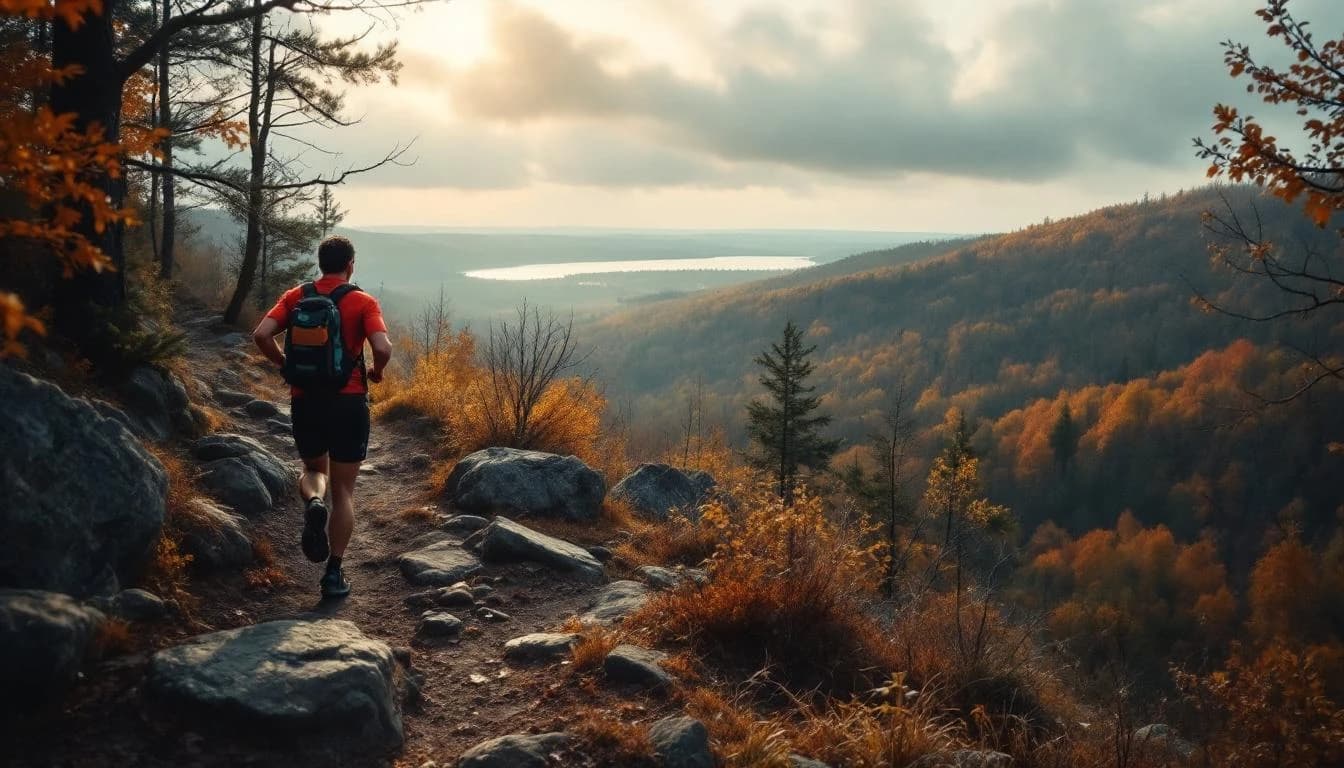
The entire course consists of single-track trails winding through a hardwood forest, with the trail surface characterized by rocks and technical sections that demand careful foot placement. Runners traverse the same 6.75-mile loop multiple times depending on their chosen distance, with occasional glimpses of Lake Perry breaking through the forest canopy.
Each loop includes 752 feet of climbing and descending, though the course deliberately avoids the tallest hills in the trail system for safety considerations. The technical nature of the terrain, combined with the self-supported sections between the single aid station, creates a unique challenge that tests both running skills and race strategy.
Elevation Profile
Elevation profile estimated from terrain data. Actual course may differ.
The course gains 52 ft over 13 miles, with the steepest section between mile 20–mile 20.
Location
Practical Info
Mid-October in Kansas typically brings mild temperatures with potential for variable conditions.
MCI - Kansas City International Airport
Lake Charles area offers limited local lodging; Kansas City metro area provides more extensive accommodation options about 45 minutes away.
- Hydration device or water bottle
Best For
Notable Features
The Free State Trail Run's defining characteristic is its uncompromising commitment to technical single-track terrain. Unlike many trail races that mix easier sections with challenging ones, every step of this course demands attention and skill. The loop format creates a unique dynamic where runners can adjust their race strategy with each pass through the start/finish area, accessing drop bags and reassessing their approach based on evolving conditions and fatigue levels.