About This Race
The MUT by UTMB 98K represents the flagship distance in South Africa's contribution to the UTMB World Series, threading through the Outeniqua Mountains above George in the Western Cape. At just over 60 miles, this route demands sustained mountain fitness across a day-long effort through one of the country's most biodiverse regions, where indigenous fynbos transitions to Afromontane forest and back again. The race serves dual purposes: a proving ground for runners targeting longer UTMB World Series events, and a worthy destination ultra in its own right for those seeking technical mountain running outside the northern hemisphere's crowded calendar. Runners navigate technical terrain that rewards both climbing efficiency and confident descending. The Outeniqua range presents continuously varied footing, from rocky singletrack through fynbos heathlands to root-laced forest paths, with enough elevation change to test pacing discipline over 10-12 hours of movement. The course design prioritizes the region's natural features rather than following roads or fire breaks, creating the sustained technical challenge that defines South African mountain racing. The May timing positions the race in the Western Cape's autumn, offering cooler temperatures than summer but requiring preparation for rapidly changing mountain conditions. George serves as the logistical hub, a coastal city with established infrastructure that makes the race accessible for international runners while maintaining its character as a genuine mountain challenge rather than an urban trail event.
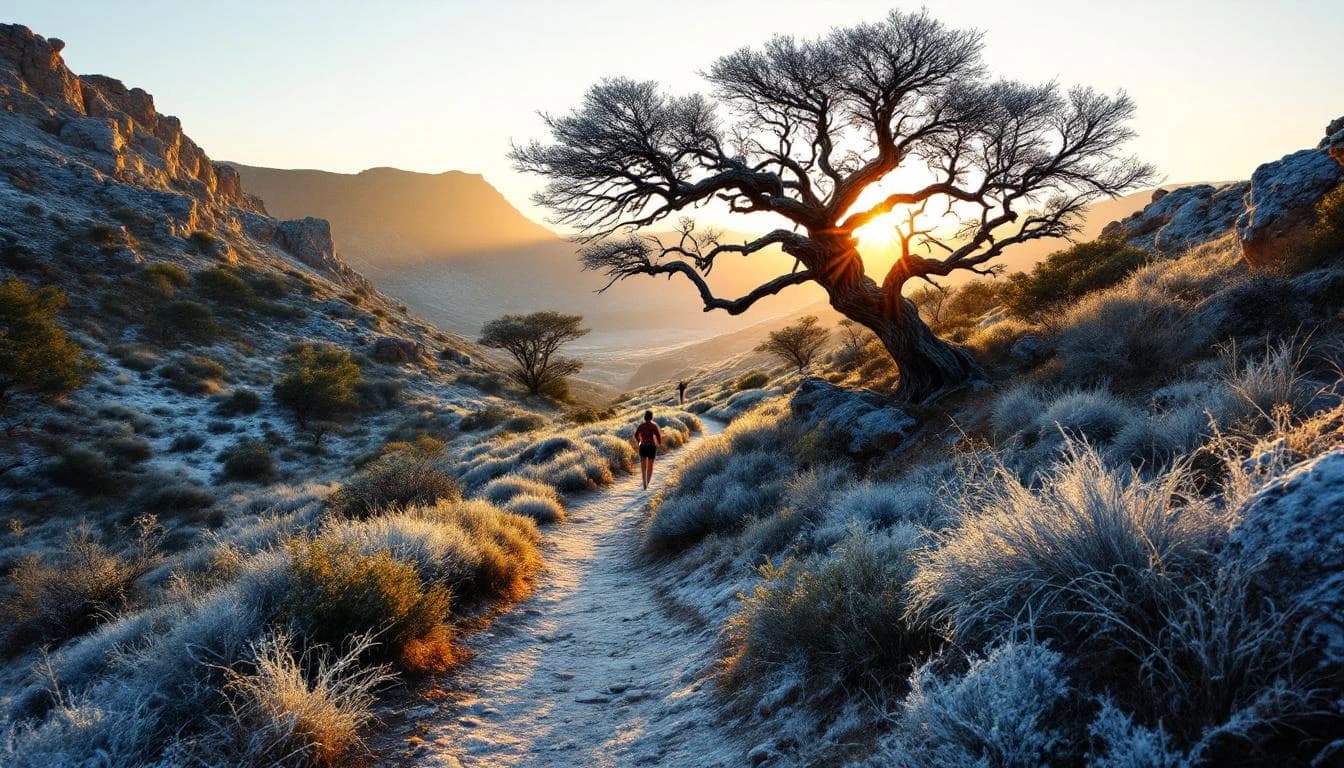
The route explores the Outeniqua Mountains through ecosystems that shift with elevation. Lower sections wind through protected fynbos, the fire-adapted shrubland unique to the Cape, before climbing into indigenous forest zones where yellowwood and stinkwood trees form canopy overhead. Technical singletrack dominates, with the mountain's geology creating rocky, root-crossed paths that demand constant attention to foot placement.
The course's technical nature stems from natural trail conditions rather than artificial difficulty. Runners encounter the terrain that local mountain runners train on year-round: uneven rock slabs, embedded roots, and the occasional stream crossing. Navigation follows marked trails through the route, with the forest sections providing shade and the fynbos ridges offering views across the Outeniqua range toward the Indian Ocean.
Elevation Profile
Elevation profile estimated from terrain data. Actual course may differ.
The course gains 831m over 98km, with the steepest section between km 67–km 67.
Location
Practical Info
Autumn conditions in May bring moderate temperatures, typically 10-20°C, with potential for rain and rapid weather changes in the mountains; coastal fog possible in morning hours.
GRJ - George Airport
George offers hotels and guesthouses serving the Garden Route tourism corridor; advance booking recommended as the race coincides with shoulder season travel along the coast.
Best For
Notable Features
This race provides northern hemisphere runners access to southern hemisphere trails during their off-season, with the May date falling in autumn when European and North American ultras haven't yet filled the calendar. The Outeniqua ecosystem presents terrain unfamiliar to most international visitors: fynbos found nowhere else on earth, Afromontane forest remnants, and the distinctive geology of the Cape Fold Belt. As a UTMB World Series event, the 98K offers qualifying points and the organizational standards that come with the circuit, while maintaining connection to South Africa's established mountain running culture.